
For decades, your business was your identity, your daily structure, your sense of purpose. The sale may have been financially successful, but the aftermath can feel unexpectedly hollow. You’ve reached the summit only to wonder what comes next. This emotional complexity is normal, and you’re not alone in experiencing it.
Navigating life after selling a business requires more than financial planning. It demands a thoughtful approach to rebuilding your sense of self and finding new meaning in this next chapter.

The emotional impact of a business exit often catches entrepreneurs off guard as years of dedication, daily routines and professional identity disappear almost overnight. What follows can feel disorienting, even when the financial outcome exceeds expectations.
Positive psychologist Tal Ben-Shahar calls this the “arrival fallacy” — the mistaken belief that reaching a major goal will bring lasting fulfillment. Many after-exit entrepreneurs find that achieving what they worked toward for years doesn’t deliver the satisfaction they anticipated. The accomplishment feels hollow because the journey provided more meaning than the destination itself. Instead of relief or joy, they feel listless and confused.
These feelings stem from several profound losses:
These psychological shifts are real, and acknowledging them allows you to move forward with intention and purpose.
Postsale transition planning requires a structured approach. The following framework offers a path through this complex period.
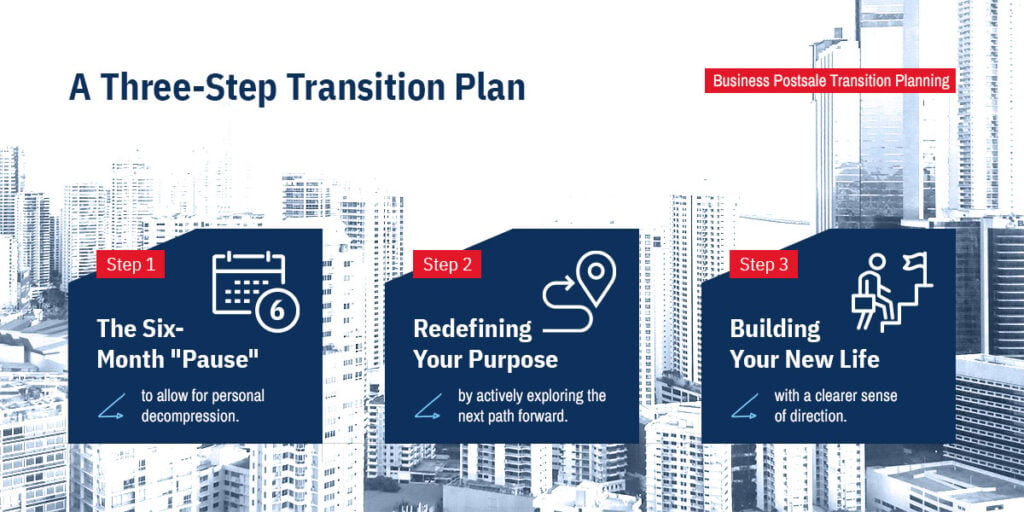
Experts from Yale School of Management recommend a six- to 12-month pause after selling a business to allow for personal decompression. This deliberate break gives you the space to process a major life transition before making binding commitments. During this pause, resist the urge to launch another venture or immediately fill your calendar with obligations. Instead, focus on self-discovery. Reflect on what energized you about your business and what drained you. Which aspects of your work do you want to carry forward, and which are you ready to leave behind? Take time to reconnect with family, explore hobbies you've put off or rest without guilt. The pause also helps you avoid rushed decisions driven by discomfort with unstructured time. It creates room for clarity to emerge organically at your own pace.
After the initial decompression, the work of finding purpose after a business exit begins. Beyond reflection, you'll actively explore what you want your next chapter to look like. Start by examining your passions, skills and values outside the context of your previous business: What problems do you care about solving? What communities do you want to serve? What legacy do you want to build? The path forward varies widely among former business owners. Some choose to mentor emerging entrepreneurs, while others invest in successful retail chains or niche manufacturing firms that align with their expertise. Still others pursue entirely new interests that their business schedule never permitted. Your next chapter simply needs to provide meaning and engagement on your terms.
With a clearer sense of direction, you can begin constructing the practical elements of life after selling your business. Now is the time to focus on creating new routines, finding community and establishing ways to contribute. Start with a daily structure. Without the natural framework your business provided, intentional routines prevent drift. Schedule regular activities that challenge you intellectually, physically or creatively. Next, find new communities that align with your evolving interests. The professional networks you built around your business may not serve your current needs, so look for groups, organizations or causes where you can connect with others who share your values. The right advisor can connect you with the relevant networks, organizations or philanthropic opportunities based on your new interests and long-term objectives. Finally, find ways to contribute your expertise. Whether through advisory roles with family-owned restaurants or bakeries, board positions with established tech companies, or volunteer work with nonprofits, sharing what you've learned creates purpose while benefiting others.
The transition from sale to second act requires both personal reflection and practical expertise in navigating the complexities of business exits and their aftermath.
Working with a team of experienced professionals who understand both the transactional and personal dimensions of selling a business can make a significant difference. The right advisor helps you structure the sale to support your after-exit goals, whether that means maximizing financial flexibility, maintaining relationships with key stakeholders and colleagues, or creating space for the pause you need. They can also anticipate the challenges ahead and connect you with resources to address them.
Business owners who have successfully navigated this change often emphasize the importance of having a partner who sees beyond the numbers. They value advisors asking questions about their vision for life after the sale, not just their financial objectives.
That support extends beyond closing. The best advisors remain available as you work through the complexity of your new reality, offering perspective gained from helping hundreds of business owners through similar shifts.

Selling your business is one of life’s most significant transitions, and the support you need doesn’t end at closing. You need a partner to advise on postsale transition planning, which includes structuring the transaction to meet both immediate and long-term personal goals.
At Inbar Group Inc., we understand the emotional and practical complexities of this journey. Our team has guided business owners through thousands of successful transactions, and we’re here to help you navigate both the sale itself and the life that follows. Our team stays available for follow-up conversations, check-ins and referrals, whether an owner needs business advisory support, introductions to investment opportunities, or connections within new industries or social circles.
We’re here to support you every step of the way. If you’re considering selling your business and want a partner who sees the complete picture, contact us for a confidential consultation.
Main Office
Administration and Mail
209 West 29th Street
Suite 318
New York, NY 10001
Phone: 212-473-5000
Connecticut Office - Hartford
Pennsylvania Office - Pittsburgh
1001 Liberty Ave, 5th Floor
Pittsburgh, PA 15222
Phone: (215) 461-5000
Pennsylvania Office - Philadelphia
Two Liberty Place
50 South 16th Street
17th floor
Philadelphia, PA 19102
Phone: 215-388-2334
INBAR GROUP, INC.
Business Sales & Acquisitions
info@inbargroup.com
Main Office
Administration and Mail
209 West 29th Street
Suite 318
New York, NY 10001
Phone: (212) 473-5000
Email: info@inbargroup.com
New York, Manhattan Office
1411 Broadway
16th Floor
New York, NY 10018
Phone: (212) 473-5000
Email: info@inbargroup.com
New York, Westchester Office
112 S Main Street,
Port Chester NY 10573
Phone: (212) 516-2818
Email: info@inbargroup.com
New Jersey Office
2 University Plaza
Suite #100
Hackensack, NJ 07601
Phone: (201) 474-3000
Email: info@inbargroup.com
Pennsylvania & Delaware Office
Two Liberty Place,
50 South 16th St., 17th floor,
Philadelphia, PA 19102
Phone: (215) 388-2334
Email: info@inbargroup.com
Washington DC, Maryland & Virginia Office
650 Massachusetts Ave NW,
Suite # 600,
Washington D.C. 20001
Phone: (202) 516-7800
Email: info@inbargroup.com
Connecticut, Greenwich Office
177 West Putnam Ave. Ste 12609
Greenwich, CT 06831
Phone: (475) 253-3352
Email: info@inbargroup.com
Maine, Vermont, New Hampshire & Rhode Island Office
12 Shuman Ave. Suite #10,
Augusta, ME 04330
Phone: (207) 480-1113
Email: info@inbargroup.com
Massachusetts, Boston, Office
770 Legacy Place
Dedham, MA 02026
Phone: (617) 934-8000
Email: info@inbargroup.com



© 2026 Inbar Group, Inc. Terms of Service | Privacy Policy | Cookie Policy | Site Design by Deal Studio